What is a milonga?
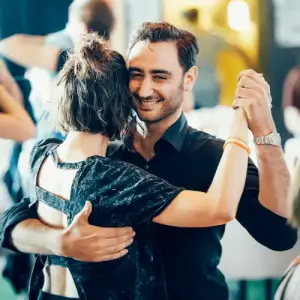
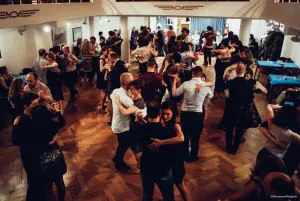
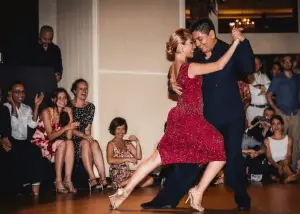
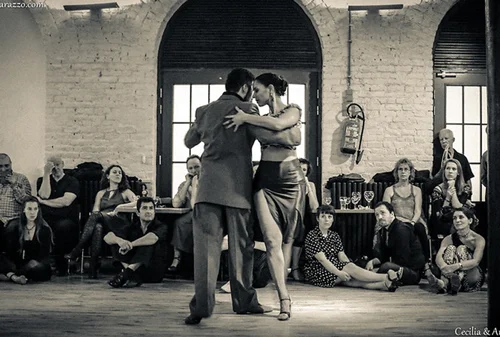
The term milonga refers both to a social tango gathering and a specific musical rhythm. First, the event: the milonga is where we gather in Brussels to connect with friends and lose ourselves in the embrace. Think of it as our tango club, our regular night out.
Second, the rhythm: alongside tango and vals (tango waltz), milonga defines the fast, playful, syncopated music that compels you to dance. So, "Are you going to the milonga Saturday?" refers to the event. But a DJ announcing a "tanda of milonga" signals the faster rhythm. You'll grasp the distinction within a couple of weeks of classes.
The milonga is not just where you practice steps — it is where tango comes alive.
How a milonga is organised
Far from chaotic, a milonga adheres to a beautiful, strict structure inherited from the golden-age dance halls of Buenos Aires. Understanding this structure allows the evening to flow seamlessly.
Tandas and cortinas: The DJ plays music in sets called tandas—typically three or four songs by the same orchestra. Between tandas, a cortina (a "curtain" of non-tango music) signals the end of the set, prompting dancers to thank their partners, leave the floor, and seek their next dance.
The cabeceo: Instead of approaching someone directly, dancers employ the cabeceo—an invitation made through eye contact. You catch someone's eye, nod, and await their answering nod before meeting at the edge of the floor. This silent invitation avoids public rejection. Though requiring initial courage, it remains the customary way to invite a dance.
The ronda: Dancers move in a counter-clockwise circle called the ronda, the line of dance. Maintaining its flow and respecting the space of surrounding couples is paramount. We emphasise this from the first class at BE-TANGO to prevent collisions.
Milonga etiquette: the códigos
The evening functions through adherence to the códigos (codes). These guidelines ensure a safe and respectful dance floor.
Thank your partner after the tanda. Always offer thanks, even if the connection was poor; a simple "merci" is obligatory. Respect the ronda. Avoid zig-zagging, aggressively passing other couples, or stopping to chat. Maintain movement. If stopping becomes necessary, guide your partner toward the centre.
Never teach on the dance floor. This rule is absolute. The milonga is for dancing; correcting your partner destroys the atmosphere and suggests arrogance. Should a step falter, smile and continue. Reserve technical instruction for our classes—your investment secures that expertise! Make an effort with your appearance. A milonga warrants a presentable appearance. While a tuxedo isn't required, dressing with care demonstrates respect for your partner and the event.
Milongas in Brussels
Brussels boasts one of Europe's most vibrant and dedicated tango scenes. A quality milonga can be found here almost every night. The spectrum ranges from intimate gatherings in Saint-Gilles to grand, classic evenings at established venues like La Maison du Peuple.
Our BE-TANGO milongas offer the best introduction, providing familiar ground where you dance alongside classmates. This familiarity eases nerves, allowing greater focus on the music and the dance. It effectively bridges the gap between studio practice and real-world application.
Don't be intimidated by experienced dancers; the Brussels community is welcoming. Everyone experiences their first milonga. Attend, observe the códigos, purchase a drink, and you'll integrate seamlessly.
The difference between a milonga, a practica, and a class
As a beginner to tango, you'll quickly hear these three words: milonga, practica, and class. While all revolve around Argentine tango, they offer distinct experiences and serve different purposes. Here's a breakdown for you.
A class, as you know, is where you learn the fundamentals. It's structured, with a teacher guiding you through steps, technique, and musicality. You'll work with your fixed partner, receive direct instruction, and build your foundational skills. Classes are perfect for learning new steps and improving your technique.
A practica, on the other hand, is a more relaxed and informal setting for practicing what you've learned. Think of it as a supervised practice session. Often, there will be a teacher present who can answer questions and offer guidance, but the focus is on applying what you've learned in a less structured environment. You can experiment with new moves, work on your embrace, and dance with different partners without the pressure of performing. It's a great place to ask questions that you might not feel comfortable asking during a class. Practicas are fantastic for solidifying your understanding and gaining confidence. Think of the BE-TANGO practicas as a safe space to test out what you learn in class.
Finally, a milonga, as we've discussed, is a social tango event. It's where you put your skills into practice in a real-world setting. The atmosphere is more formal than a practica, with emphasis on social dancing and adherence to the códigos (etiquette). While you can certainly improve your dancing at a milonga, the primary focus is on enjoying the music, connecting with partners, and immersing yourself in the tango community. Think of a milonga as a celebration of tango, a place to connect with other dancers and enjoy the music.
When should you attend each? Start with classes to build your foundation. Once you feel comfortable with the basic steps, introduce practicas to refine your skills. When you're ready to socialize and experience the magic of tango, step onto the milonga floor. You might find this tango glossary helpful as you begin to learn more about tango terminology.
What music is played at a milonga?
The music at a milonga is carefully curated to create a specific atmosphere and flow. It's not just a random playlist; it's a journey through the world of Argentine tango music.
The music is played in tandas, which are sets of 3-4 songs by the same orchestra. This allows dancers to connect with the music and their partner without interruption. The most common tandas are tango tandas, but you'll also hear vals tandas (waltzes) and milonga tandas (faster, more rhythmic music). You might find this article about tango, vals, and milonga differences useful.
Between each tanda is a short musical interlude called a cortina (curtain). This is a non-tango piece of music, usually lasting around 30 seconds. The cortina signals the end of the tanda and gives dancers a chance to thank their partner, return to their seats, and look for a new partner for the next tanda. It's also a moment to catch your breath!
The DJ (or musicalizador) plays a crucial role in setting the tone of the milonga. There are typically two main schools of thought when it comes to music selection: Golden Age and Neo-Tango. Golden Age DJs focus on the classic orchestras of the 1930s, 40s, and 50s, such as Carlos Di Sarli, Juan D'Arienzo, Anibal Troilo, and Osvaldo Pugliese. These orchestras are known for their distinct styles and arrangements, and they are the foundation of tango music. Neo-Tango DJs, on the other hand, incorporate more contemporary tango music, often including electronic elements and modern arrangements. While BE-TANGO milongas often lean towards the Golden Age, we appreciate a well-placed neo-tango tanda to keep things interesting. You'll likely hear some of the classics like Piazzolla, too.
The specific orchestras you'll hear depend on the DJ's preferences and the overall style of the milonga. However, you can generally expect to hear a mix of the classic orchestras mentioned above, as well as other notable names like Rodolfo Biagi and Miguel Caló. The key is to listen to the music and let it guide your movements.
Your first milonga: a step-by-step guide
Stepping into your first milonga can be a bit daunting, but with a little preparation and understanding of the process, you'll be enjoying the dance in no time. Here's a step-by-step guide to help ease your nerves:
1. Arrive and settle in: Find the location (check our Brussels milonga guide for upcoming events!), and take a deep breath. Once inside, find a spot to leave your coat and bag. Many milongas have designated areas for this.
2. Change your shoes: Tango shoes are essential for dancing comfortably and safely. Find a spot to change into your tango shoes. Remember to bring a shoe bag to protect your regular shoes.
3. Find a seat: Milongas are typically arranged with tables and chairs around the dance floor. Find an empty seat and settle in. It's perfectly acceptable to sit alone, especially if you're new.
4. Observe the dance floor: Take some time to watch the dancers and get a feel for the atmosphere. Pay attention to the ronda (the counter-clockwise flow of dancers) and the cabeceo (the eye contact invitation). Observing is a great way to learn the etiquette and build your confidence.
5. Make eye contact (Cabeceo): When you see someone you'd like to dance with, make eye contact. Hold their gaze and offer a subtle nod or smile. If they reciprocate, you've got your invitation! If not, don't take it personally; simply try again with someone else.
6. Walk onto the dance floor: Once you've been invited to dance, meet your partner near the edge of the dance floor and take your position in the ronda.
7. Dance the tanda: Enjoy the music and connect with your partner. Focus on leading or following clearly and respectfully. Remember the steps you've learned in class and practice. Don't be afraid to make mistakes; everyone does!
8. Thank your partner: At the end of the tanda, thank your partner for the dance. A simple "gracias" (thank you) is sufficient. You can also offer a compliment on their dancing.
9. Return to your seat: After thanking your partner, return to your seat and repeat the process. Don't be afraid to initiate the cabeceo or accept invitations from others. Remember, the goal is to enjoy the music, connect with people, and have fun. And remember to dress the part - read our article on what to wear to tango class.
Frequently Asked Questions
Can beginners go to a milonga?
Absolutely! While it's helpful to have some basic tango knowledge, beginners are welcome at most milongas. It's a great way to immerse yourself in the tango community and learn by observation. Just be mindful of the dance floor etiquette and be prepared to dance with more experienced dancers who can help guide you.
Do I have to dance with everyone?
No, you are never obligated to dance with anyone you don't want to. Tango is a social dance, but it's also about personal connection and comfort. If you're not feeling a connection or simply want to sit out a tanda, that's perfectly acceptable. The cabeceo gives you the opportunity to accept or decline an invitation gracefully.
What if nobody asks me to dance?
It can be discouraging if you're not being asked to dance, especially as a beginner. Don't take it personally! There are many reasons why someone might not ask you to dance. Be proactive and initiate the cabeceo yourself. Also, consider sitting near the dance floor where you're more visible. Attending with friends can also help boost your confidence and increase your chances of being asked to dance. Remember, everyone was a beginner once!
Is there food and drink?
Many milongas in Brussels offer food and drinks, ranging from simple snacks and refreshments to full meals. Some milongas have a bar where you can purchase drinks, while others offer complimentary refreshments. It's always a good idea to check the specific milonga's website or social media page to see what's available. The BE-TANGO milongas often feature local Belgian beers and light snacks.
How long does a milonga last?
Milongas typically last for several hours, often starting in the late evening and continuing until the early morning hours. The exact duration varies depending on the milonga and the day of the week. Some milongas in Brussels start around 9 PM and end around 2 AM, while others may go on even later. It's perfectly acceptable to stay for as long or as short as you like.
Can I go to a milonga alone?
Yes, absolutely! Many people attend milongas alone and find it to be a great way to meet new people and connect with the tango community. Don't be afraid to strike up conversations with other dancers and introduce yourself. Tango is a very social dance, and most people are welcoming and friendly. Attending our BE-TANGO milongas is a great way to meet other tango enthusiasts in Brussels.
How to prepare for your first milonga
When will you feel ready? Realistically, after at least three to four months of consistent classes. This isn't about elaborate steps. Readiness comes when your walk feels grounded, your embrace comfortable, and you can navigate the ronda confidently. Attending prematurely risks frustration.
For your first milonga, attend with BE-TANGO classmates; arriving with a group transforms the experience. Regardless, avoid rushing onto the floor immediately. Take a seat, order wine, and observe for a few tandas. Study the room, note skilled navigators, and breathe.
Consult us beforehand. Ask our BE-TANGO instructors about the Brussels milonga best suited for beginners that week. We frequently organise group outings, allowing you to enter the dance floor with instructors nearby. Your tango journey begins here in the studio. Book a trial class, and we'll prepare you for that initial, unforgettable night.