Tango — the dance of passion and pause
What is tango? Fundamentally, it is a walking dance, yet its magic resides in the caminata—the walk itself—and in the pregnant paradas, the pauses. As we tell our Brussels beginners, a pause is never merely a stop; it is a moment to build tension and truly listen to your partner. Indeed, the pause is arguably your most potent move.
On the dance floor, the drama unfolds through the contrast between a grounded walk and sweeping, circular figures such as the ocho and the giro. Crucially, tango is not a fixed routine, but an improvised conversation created in the moment.
Tango is not about memorizing steps. It is an honest conversation between two people and the music.
Everything depends on the abrazo, the embrace. Without a secure, comfortable embrace, one is merely stepping to the music, which is not tango. To be clear: achieving this takes dedication. It demands technique, musicality, and a willingness to connect with another human being.
To illustrate, listen to Mis Pesares by Edgardo Donato & Horacio Lagos (1940) for a playful, rhythmic experience. For profound, melancholic introspection, choose Recién by Ricardo Tanturi & Enrique Campos (1944).
Vals — the flowing waltz of tango
What distinguishes Argentine vals? Its defining characteristic is continuous circular movement. The insistent 1-2-3 rhythm propels you forward relentlessly, precluding the dramatic pauses found in tango. The singular aim is unbroken flow, like a current carrying you across the floor.
Abandon the heavy, grounded steps of tango. Vals demands quick, light impulses to drive the dance, creating a sensation of gliding. The mood is lighter and more romantic, while the connection with your partner remains intensely focused, perhaps even more so.
The sheer velocity of vals allows no artifice; the lead becomes a near-silent suggestion, met by instantaneous response. Executed correctly, the sensation is one of shared levitation. It is, without question, our favorite rhythm to teach.
To experience this sweeping energy, listen to Juan D'Arienzo's Pasión from 1937; its essence will be immediately clear.
Milonga — playful and demanding
Milonga demands pure, joyful energy and rapid footwork. Its rhythm is fast and syncopated, employing a technique known as traspié contratiempo. Forget elegant, sweeping strides; there is simply no time. Milonga requires small, sharp, direct steps that capture every beat.
Weight must be perfectly balanced over the toes, poised for instant changes of direction. After years on the dance floor, we can attest that milonga offers unparalleled joy, yet it is brutally honest. A failure to internalise the rhythm leads to inevitable missteps.
Milonga is the laughter of tango — fast, unapologetic, and full of energy.
Learning milonga compels one to discover tango's playful, mischievous character. When a DJ introduces a milonga tanda at a local Brussels venue like La Cellule, or during our summer open-air events, the atmosphere transforms; the energy becomes explosive.
Listen to Milonga Sentimental by Francisco Canaro (1933) to appreciate its classic bounce. Alternatively, for a demanding footwork challenge, try Milonga del 83 by Juan D'Arienzo (1940).
Similarities and differences at a glance
How do these three styles relate? Despite their distinct feel, tango, vals, and milonga share a common foundation. Here are the elements that unite them:
The same foundation: All three styles employ the same basic steps and figures. The key is not learning new movements, but adapting your walk to the rhythm. Timing is paramount.
It's all about the music: One cannot dance what one does not hear. Immersion in the music is essential for each style, allowing its character to dictate movement. In our classes, musicality is a non-negotiable principle.
The embrace is everything: Whether navigating a rapid milonga or surrendering to a slow vals, the abrazo is vital. A close, responsive connection is what makes the dance succeed.
It's always improvised: Eschewing ballroom conventions and pre-set routines, each dance is a unique dialogue between you, your partner, and the music. This unscripted improvisation defines Argentine tango.
Start your tango journey at BE-TANGO
At BE-TANGO, we teach tango, vals, and milonga. Teaching in Brussels since 2007, we understand how to guide you from your first step. While we emphasize technique, our primary aim is to instill the confidence needed to enjoy yourself at local milongas.
Convinced you have two left feet? Rest assured, we have seen it all, and everyone begins somewhere. Our small class sizes allow us to closely observe your footwork. Visit us at either of our Brussels locations: BE-TANGO Centre, in the city's heart, or BE-TANGO Woluwe, in Woluwe-Saint-Pierre.
Ready to try it? Your first class is complimentary. Attend a free trial lesson to assess our teaching approach. A partner and tango shoes are unnecessary; simply arrive.
How to dance each rhythm: technique differences
Each of these beautiful tango rhythms – tango, vals, and milonga – demands a slightly different approach. In tango, it's all about the pause. Embrace the stillness, let the music breathe, and use that space to connect with your partner and the emotion of the music. Don't rush! Think about the *caminata*, the walk, and how you can use subtle shifts in weight and energy to create tension and release.
Vals, on the other hand, is a continuous flow. Imagine you're gliding across the dance floor in a graceful circle. There's almost no stopping. The challenge is to maintain that flow while still staying connected to your partner and the music’s 1-2-3 rhythm. Think light impulses, a gentle push and pull that keeps you moving. Don’t get stuck in rigid patterns; let the music guide you.
Milonga is where things get playful and a little bit cheeky! It demands a lightness and agility that’s different from tango. Focus on small, sharp steps and the *traspié*. This off-beat step adds a syncopated rhythm that’s incredibly fun to dance but takes practice to master. Think quick changes of direction and a mischievous energy. It’s definitely the most demanding of the three, but also the most rewarding when you get it right. You can see how the *traspie* fits into the larger milonga landscape on this post.
Here is one of our online lessons (recorded during the Covid lockdown) that explains the basic rhythm of milonga:
Essential recordings: a playlist for each rhythm
To truly understand tango, vals, and milonga, you need to listen! Here are a few essential recordings to get you started, and what we suggest you listen for:
Tango:
- Orquesta Típica Victor, "La Tablada" (1928): A classic example of early tango, perfect for understanding the foundational rhythms. Listen to the interplay between the bandoneon and the violin.
- Carlos Di Sarli, "Bahia Blanca" (1956): Di Sarli's music is elegant and powerful. Notice how the pauses are used to create dramatic tension.
- Aníbal Troilo with Roberto Goyeneche, "Garúa" (1943): Goyeneche's voice perfectly captures the melancholic spirit of tango. Pay attention to how the orchestra supports the vocals.
Vals:
- Juan D'Arienzo, "Desde el Alma" (1938): D'Arienzo's vals are fast-paced and energetic. Focus on the clear 1-2-3 rhythm and the driving beat.
- Osvaldo Pugliese, "La Yumba" (1946): Pugliese brings a more dramatic and theatrical feel to the vals. Listen for the dynamic shifts and the expressive use of the orchestra.
- Ricardo Tanturi, "Una Emoción" (1941): A beautiful vals with a romantic melody. Pay attention to the smooth transitions and the flowing quality of the music.
Milonga:
- Francisco Canaro, "Milonga Sentimental" (1936): Canaro's milongas are playful and lighthearted. Listen for the syncopated rhythms and the quick changes in tempo.
- Juan D'Arienzo, "Milonga del 83" (1951): D'Arienzo's milongas are fast and furious! Try to identify the *traspié* rhythm in the music.
- Rodolfo Biagi, "Humoristico" (1940): Biagi's milongas have a distinctive sound, characterized by his staccato piano playing.
When do you learn vals and milonga in tango classes?
At BE-TANGO here in Brussels, we typically introduce the different rhythms in a structured way to help you build a solid foundation. We believe that starting with tango is crucial. You'll spend the first few months (typically 1-3) focusing on the fundamental steps, the embrace, and how to connect with the music. This gives you the core skills you need to progress.
Vals usually follows, around months 3-6. By this point, you'll be comfortable with the basic tango walk and embrace, and you'll be ready to explore the flowing, circular movements of vals. It builds upon your existing tango skills, challenging you to maintain connection and balance while moving continuously. If you're keen to learn more about how long it takes to learn tango, have a look at this post.
Milonga is generally introduced later, after about 6 months or more of tango experience. It's the most rhythmically complex of the three, and requires a good understanding of tango technique and musicality. Introducing it too early can be overwhelming. Think of it as the advanced class! This phased approach helps you develop a well-rounded understanding of Argentine tango. Check out our Beginners tango classes in Brussels.
Frequently Asked Questions
Can I dance vals at a milonga event?
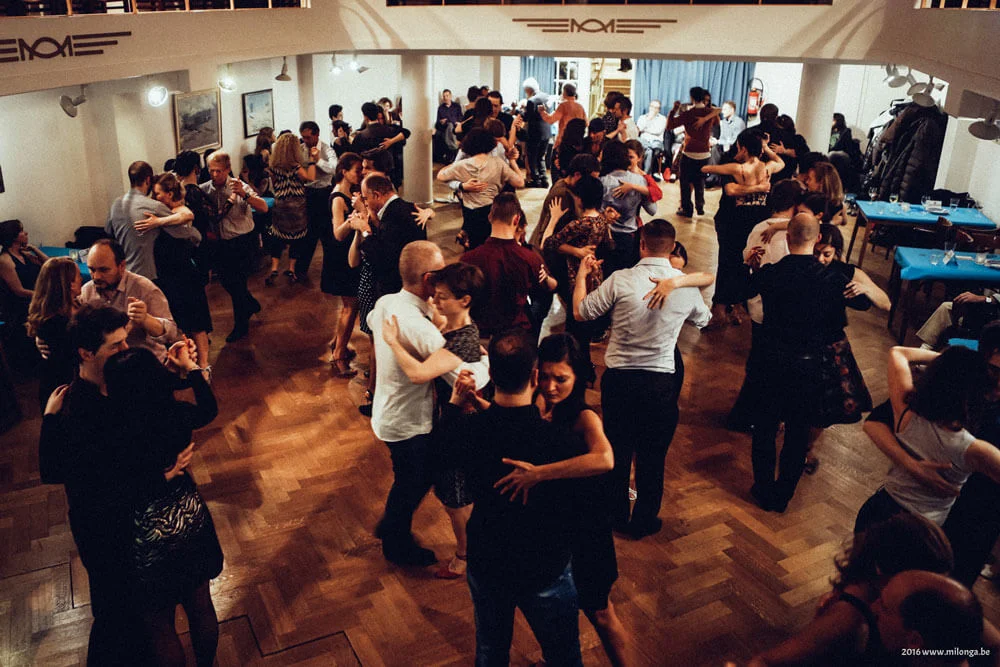
Absolutely! A typical milonga evening in Brussels will include sets of tango, vals, and milonga music. Usually, DJs play these in *tandas* – sets of 3-4 songs of the same rhythm, followed by a *cortina* (a short, non-tango song) to signal the end of the set and a chance to change partners.
Why is milonga so hard?
Milonga is challenging because of its speed and syncopated rhythms. The *traspié* requires precise footwork and a good sense of timing. It also demands a higher level of energy and agility than tango or vals. But don't let that scare you off – it's incredibly fun once you get the hang of it!
Is vals easier than tango?
Not necessarily. Vals requires a different kind of skill. While the steps themselves might seem simpler than some tango figures, maintaining the continuous flow and connection with your partner can be quite challenging. It really depends on your individual strengths and learning style.
What does a DJ play at a typical milonga evening?
A good milonga DJ will curate a selection of music that is danceable and engaging, creating a good balance and flow through the evening. You can expect to hear a mix of classic tango orchestras like D'Arienzo, Di Sarli, Troilo, and Pugliese, as well as some vals and milonga sets to keep things interesting. The DJ will also consider the mood and energy of the dancers when selecting the music.
Which rhythm should beginners focus on?
Beginners should definitely focus on tango first. Mastering the basic walk, the embrace, and the fundamental steps of tango will provide a solid foundation for learning vals and milonga later on. Trying to learn all three at once can be overwhelming. Think of tango as the foundation upon which you build your tango house. You can also read about the history of argentine tango on our blog.