What does a typical beginner class look like?
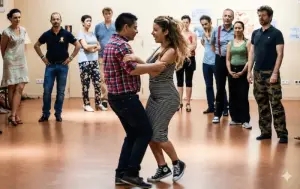
Our beginner classes are 60 minutes long and start with a warm-up dance. We begin with basic body mechanics, shifting your awareness from the everyday to your own feet. This initial focus—awareness of posture and weight transfer—defines the essence of tango.
Next, we address a fundamental aspect of the dance: the walk. While it may seem elementary, the walk is paramount in tango. You'll refine your own walk and axis before engaging in a comfortable embrace with a partner.
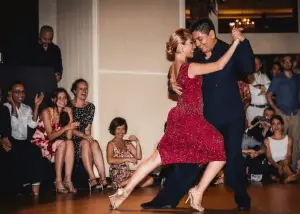
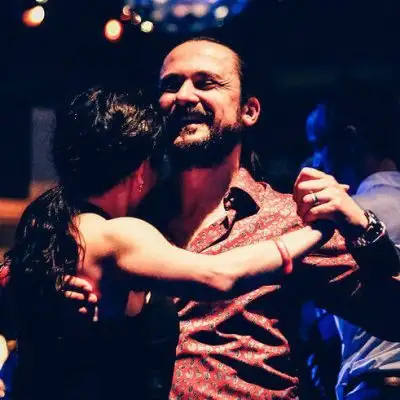
You practise with your dedicated dance partner throughout the class, building a consistent connection and encouraging attentive listening. Towards the end of the 60 minutes, accompanied by classic Pugliese or Di Sarli, you'll find yourself actually dancing, at which point the magic unfolds.
Forget about 'getting it right' on day one. Come with an open mind and let yourself be curious.
Do I need to bring a partner?
No. We match every student with a dedicated dance partner — and confirm your registration once we find the right match. This ensures everyone has a fixed partner from the very first class.
If you sign up alone, we match you with a fixed dance partner for the full course. Having a dedicated partner allows you to build a deeper connection and focus on developing your leading and following skills together.
Moreover, the Brussels tango scene is incredibly diverse. You might find yourself dancing with anyone from an EU commission lawyer to an artist from Saint-Gilles, or a student from VUB or ULB. Real friendships often begin on our dance floor, and you'll be joining a room of fellow beginners in a similar situation.
What should I wear?
Opt for comfortable, unrestricted clothing. Simplicity is key. Jeans, loose trousers, a t-shirt—anything that allows free backwards steps will work. We prioritise movement over aesthetics.
Footwear, however, is important. The essential requirement is a sliding sole. Avoid rubber-soled trainers or sneakers, as they impede pivoting and can strain your knees. For your first class, dress shoes with smooth leather or hard plastic soles are suitable. If unavailable, thick socks are a viable alternative for beginners.
Advanced dancers often wear specialised tango shoes, but these are unnecessary at first. Invest in them once you've become captivated by the dance. For now, prioritise footwear that slides easily.
What will I actually learn in the first few lessons?
We don't teach choreography, as tango is an improvised dance, not a memorised sequence. Instead, we focus on the foundation: the underlying mechanics that allow you to confidently improvise with anyone, anywhere from Brussels to Buenos Aires.
Our teaching method strips tango down to its core elements: the tango walk, characterised by intentional movement into the floor; the embrace, establishing a comfortable, tension-free connection; and the connection itself, which involves communicating direction and weight through non-verbal cues.
If you seek elaborate legwork seen on YouTube, this may not be the right school. Having taught in Brussels since 2007, we can assure you that la base is paramount, while flashy embellishments are secondary. The walk, seemingly simple, is the most challenging and rewarding aspect of tango.
Ready to try? Book your free trial class
Reading about tango is one thing, but experiencing it firsthand is essential. That's why we offer a free trial class with no obligation, allowing you to discover if it resonates with you.
These beginner sessions are held in central Brussels (Rue du Marais 68) and in Woluwe-Saint-Pierre (Av. Orban 54). Whether you come alone, with a friend, or with a partner, simply wear comfortable clothing and bring an open mind.
At BE-TANGO, we've guided thousands of Brussels residents through their initial tango steps. Recognising that entering a dance studio can be daunting, we maintain a grounded, structured, and enjoyable learning environment, ensuring no one is left behind.
Before the Class: Preparing Yourself
Honestly, the best preparation for your first tango class with us here in Brussels is simply showing up with an open mind and a willingness to try something new. There's no need to practice beforehand or study any steps. We'll guide you through everything from the very beginning.
However, it's perfectly normal to feel a little nervous, especially if you're new to partner dancing. Many of our students experience a touch of performance anxiety before their first class. Know that you're not alone, and our focus is on creating a supportive and encouraging environment. Remember, everyone in the class is there to learn and have fun. We embrace mistakes as part of the learning process.
We recommend arriving about 10 minutes early. This gives you time to find the studio, settle in, and perhaps chat with some of the other participants. Our studio is located just a short walk from the Grand Place, and you'll find it's a warm and inviting space, designed to feel comfortable and inspiring. We keep the lighting soft, the floors smooth, and the atmosphere relaxed. Remember, you can always check out our article on what to wear to a tango class if you're still unsure about attire!
The Heartbeat of Tango: The Music
Tango isn't just about steps; it's deeply intertwined with the music. In your first class, you'll be introduced to the sounds of the Golden Age orchestras, which are the foundation of social tango. Think of the rhythmic precision of Juan D'Arienzo, the elegant melodies of Carlos Di Sarli, and the dramatic flair of Osvaldo Pugliese.
These orchestras created a rich and diverse musical landscape that inspires dancers to connect and improvise. The music isn't just background noise; it's a conversation, a story, and a partner in itself. It's what guides our movements and fuels the passion of the dance. You'll quickly find yourself drawn into its captivating rhythms.
We'll also touch upon the different rhythmic varieties within tango. While you'll be dancing tango primarily, it is worth knowing that there are also milonga and vals styles. If you're curious to learn more about the differences, be sure to check out our post on tango, vals, and milonga. It will enhance your understanding and appreciation of the music's nuances.
What's Next After Your First Tango Class?
So, you've survived your first tango class and hopefully caught the tango bug! What happens next? The typical progression starts with your free trial class, followed by enrolling in our beginner course. This course builds a solid foundation in the fundamental elements of tango, focusing on the walk, embrace, and connection.
After the beginner course, many students start attending our *practicas*. These are informal practice sessions where you can work on what you've learned in a relaxed and supportive environment. It's a great opportunity to dance with different people, experiment with new steps, and ask questions. We always encourage students to attend the practica as often as possible.
The ultimate goal for many tango dancers is to attend a *milonga*, a social tango dance event. It's where you can experience the magic of tango in its natural habitat, surrounded by other dancers and the captivating sounds of the orchestra. Don't feel pressured to rush into a milonga, though. It's important to feel comfortable with the basics first. Many students feel ready to venture out after a few months of classes and practicas. We also offer specialized workshops to prepare you for the milonga experience.
Remember that learning tango is a journey, not a race. Some students progress faster than others. You can read more about estimated timelines in our article how long to learn tango. The most important thing is to enjoy the process and embrace the challenges along the way.
What Our Students Say About Their First Tango Class
It's always helpful to hear from others who have taken the plunge and experienced their first tango class. Here's a glimpse of what some of our students have shared about their initial experience at BE-TANGO here in Brussels:
"I was really nervous before the class, but our teacher and the other students were so welcoming and supportive. I immediately felt at ease." This sentiment is a common one. We pride ourselves on creating a friendly and inclusive community.
"I didn't expect to actually be dancing on the first day! I thought we'd just be learning the basics, but we were moving to the music and connecting with partners right away." Many students are surprised by how quickly they're able to start dancing.
"Having a dedicated dance partner from the start was the best part! It allowed me to build a real connection and focus on improving together. I felt comfortable and supported throughout the course." This is a key element of our teaching method, and as we say in our article learn tango without a partner, you don't need to bring your own partner!
These are just a few examples of the positive feedback we receive from our beginner students. We strive to make your first tango class a memorable and enjoyable experience.
Frequently Asked Questions
How long is the class?
Our beginner tango classes are 60 minutes long. This includes a warm-up, instruction, practice time, and a cool-down.
Will I feel lost?
Not at all! We start with the very basics and build from there. We are experienced at teaching beginners and will guide you every step of the way. We break down the movements into simple steps and provide plenty of individual attention.
What if I step on someone's toes?
It happens! Don't worry about it. Tango is a close embrace dance, and occasional toe-stepping is part of the learning process. Just apologize and keep going. Everyone understands.
Can I watch a class before I try?
While we encourage you to jump right in and experience the dance firsthand, we understand that you might want to observe first. Contact us to arrange a time to visit and watch a portion of a beginner class. However, we highly recommend taking advantage of our free trial class – it’s the best way to see if tango is right for you!
Is a trial class really free?
Yes, absolutely! Our trial class is completely free and without obligation. It's our way of introducing you to the world of tango and allowing you to experience our teaching style and community before committing to a course. We want you to be sure it's a good fit before you sign up.