What makes tango special?
Argentine tango is a living, improvised conversation between two people and an orchestra. No routines to memorise, no gymnastics required. Whether you're a 20-year-old student or an 80-year-old retiree, if you can walk, you can learn to dance tango.
The magic arises from connection, creativity, and music. Every step is improvised through attentive listening to both partner and orchestra. Having taught in Brussels since 2007, witnessing strangers discover this shared rhythm remains our greatest pleasure.
Tango is not a dance you learn — it is a dance you discover, one step at a time.
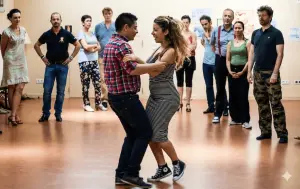
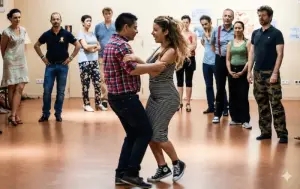
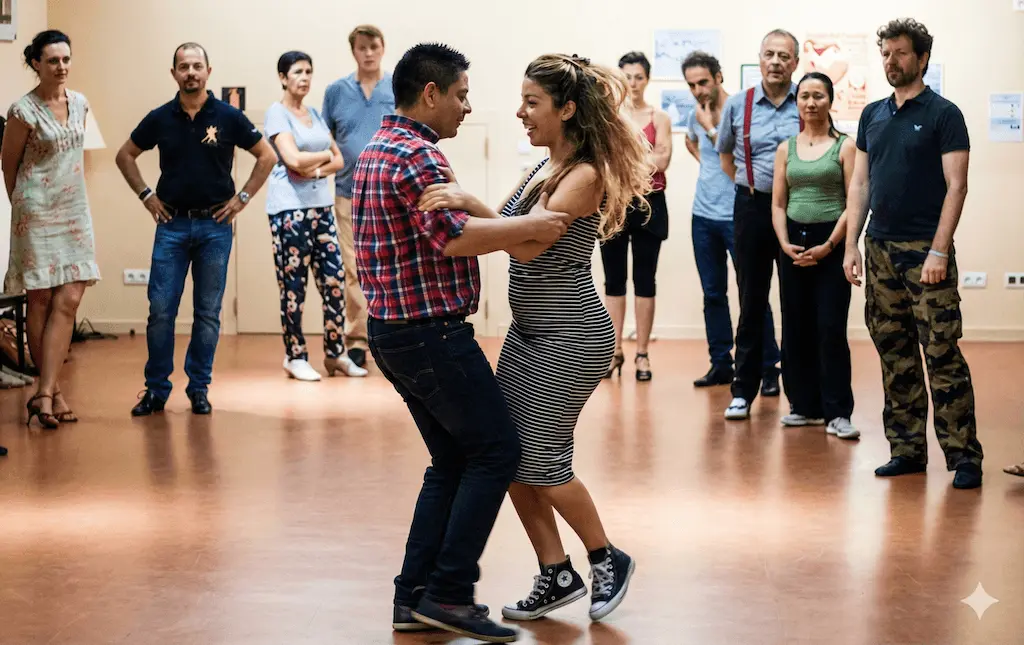
Forget the Hollywood clichés: dismiss the aggressive head snaps, dramatic high kicks, and roses clenched in teeth. That is stage tango. The social tango we dance in Brussels milongas centres on an intimate, comfortable embrace, rewarding patience, deep listening, and sensitivity, not flamboyant gestures.
A social dance for everyone
We don't dance in front of mirrors but at social gatherings called milongas. Tango is a community. In Brussels, milongas occur almost nightly, from the grand floor at La Tentation to cosy Sunday afternoon gatherings in Saint-Gilles.
The milonga is where the real work unfolds, with beginners sharing the floor alongside seasoned dancers. Honesty compels us to say: no one at a Brussels milonga values "perfect" technique. They value the feeling within the embrace. Beginners are always welcome, so take a glass of Malbec and invite someone to dance.
Tango also serves as your international passport. The etiquette remains consistent, whether at a local practica in Ixelles or a festival in Buenos Aires, Paris, or Berlin. Pack your tango shoes when travelling. Enter any milonga worldwide, exchange a glance (the cabeceo), and instantly belong.
Improvisation: the heart of tango
Argentine tango contains no choreography. The leader's role is to listen to the music and create the dance in real-time, navigating the floor with each step. This contrasts sharply with ballroom. The leader composes a unique physical dialogue with the orchestra's present moment.
Followers are not merely passengers but actively interpret the lead, embellishing with musicality through figures like boleos (sweeps) and ganchos (hooks). This active, creative listening ensures that no two dances are identical.
In tango, the leader proposes and the follower responds. Together, they create something neither could make alone.
This is precisely why tango never plateaus. After two decades of dancing, even familiar classics by Osvaldo Pugliese or Juan D'Arienzo reveal new pauses, new tensions within the embrace, new possibilities in each step. Its depth is limitless.
Do I need a partner? Beyond tango: milonga & vals
No, a partner is not required to begin. At BE-TANGO, if you sign up alone, we match you with a fixed dance partner for the full course. Your registration is confirmed once we find the right match. We also carefully manage registrations to balance leaders and followers.
Most students arrive at our Brussels studio solo and quickly find friends and favourite partners in our classes and weekly practicas. Our local community is exceptionally welcoming.
Here's a detail many beginners overlook: learning Argentine tango unlocks three distinct dances. At a traditional milonga, the DJ organises the music into tandas (sets of 3 or 4 songs), alternating between traditional tango and its two sister rhythms:
Milonga, the fast, earthy, playful predecessor to tango, emphasises quick, rhythmic footwork that invariably brings a smile. Then there is Tango Vals, danced to a sweeping 3/4 waltz rhythm, which feels fluid, circular, romantic—like flying across the floor.
Start your tango journey today
Cease overthinking and simply attend a class. People join our classes for diverse reasons: to improve posture, connect with locals after moving to Brussels, or escape daily pressures. Whatever the motivation, tango delivers.
We routinely hear concerns like "I'm too old" or "I have two left feet," but these are unfounded. We've successfully taught both awkward teenagers and inflexible 75-year-olds. The Brussels tango community welcomes everyone. No dance background is needed, only an open mind.
Join us at BE-TANGO. We offer regular classes at our main Brussels studio and our venue in Woluwe, from beginner courses to advanced technique workshops, plus private lessons for accelerated progress. Your first trial class is free. Experience it firsthand.
Tango as a Lifelong Practice: Why Dancers Never Quit
One of the beautiful things about tango is that it's a journey, not a destination. It's a dance that offers endless depth and possibilities for exploration. You'll never truly "master" it, and that's precisely what keeps it so captivating. There's always a new nuance to discover, a subtle connection to refine, a deeper understanding of the music to unlock. This continuous process of learning and improvement is incredibly rewarding.
Beyond the dance itself, tango fosters strong community bonds. You'll find yourself surrounded by passionate individuals who share your love for the dance. We often say people catch the "tango bug," and it's true! It's something that gets under your skin and stays with you. We've seen students start in their 60s and are still dancing with joy and vitality in their 80s. It's a testament to the longevity and accessibility of tango. It truly is a dance for life.
The Health Benefits of Learning Tango
Learning Argentine tango offers a wealth of benefits for your physical, mental, and cognitive well-being. Physically, tango improves your posture, balance, and coordination. The constant movement and embrace provide a gentle cardio workout. You'll find yourself standing taller and moving with more grace and confidence.
Mentally, tango is a fantastic stress reliever. The focus required to connect with your partner and the music promotes mindfulness and helps you escape the stresses of daily life. The social aspect of tango is also incredibly important for mental health, providing a sense of belonging and connection. And cognitively, tango challenges your memory, decision-making, and spatial awareness. You're constantly learning new steps and adapting to your partner's lead, which keeps your mind sharp.
We've written a dedicated blog post that goes into much more detail about the health benefits of tango dancing, so be sure to check that out for a deeper dive!
Tango's Global Community: Dance Anywhere in the World
As we mentioned earlier, learning tango is like gaining an international passport. Once you know the basics, you can dance tango anywhere in the world! Imagine yourself dancing in a traditional milonga in Buenos Aires, the birthplace of tango, or enjoying a modern tango event in Tokyo. We've even heard of vibrant tango scenes flourishing in Istanbul and, of course, in many corners of Paris.
What makes this possible are the universal codes of tango. The cabeceo (the invitation with the eyes), the structure of tandas (sets of songs), and the flow of the ronda (the dance floor circulation) are all understood worldwide. These unspoken rules create a shared experience that transcends language and culture. You can walk into a milonga in a completely foreign city and immediately feel at home.
How Tango Enriches Your Life Beyond the Dance Floor
The benefits of tango extend far beyond the dance floor. You might be surprised at how tango can positively impact other areas of your life. For example, you'll likely find yourself with better posture in your daily life, standing taller and feeling more confident. Tango also cultivates improved listening skills, as you learn to truly listen to your partner and the music.
The confidence you gain on the dance floor can translate into other social situations. You'll become more comfortable interacting with new people and expressing yourself. And for expats living in Brussels, tango can be a fantastic way to integrate into the local community and meet new friends from all over the world. It’s a shared passion that connects people in a very unique and meaningful way.
Frequently Asked Questions
Is tango only for couples?
Absolutely not! Tango is a social dance, and most people attend milongas and classes without a partner. At BE-TANGO, if you sign up alone, we match you with a fixed dance partner for the full course. At milongas, you dance with many different people throughout the evening.
Am I too old/young to learn tango?
There's no age limit for tango! We have students of all ages, from young adults to seniors. It's a dance that can be enjoyed at any stage of life. What matters most is your passion and willingness to learn.
Is tango expensive?
The cost of tango lessons can vary. At BE-TANGO, we offer a range of options to suit different budgets. We also believe it's a worthwhile investment in your physical, mental, and social well-being. Think of it as an investment in yourself! Consider also the time commitment – how long it takes to learn tango depends on your goals!
What if I have no rhythm?
Don't worry! Rhythm can be learned and developed. Our experienced instructors will help you understand the music and find your own rhythm. Tango is more about connection and feeling than perfect steps. And we teach a variety of tango styles, including different styles of Argentine tango to suit individual preferences.
Is tango difficult to learn?
Tango can be challenging, but it's also incredibly rewarding. The basics are relatively easy to learn, and you can start dancing socially quite quickly. However, mastering tango takes time and dedication. But don't let that intimidate you! The journey is just as important as the destination. We offer a free trial so you can experience the dance for yourself!