Shared roots, diverging paths
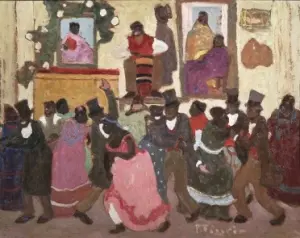
Almost every week in our Brussels studio, someone asks if Argentine and ballroom tango are the same. They are not. Though distinct, they share a common ancestor: the original popular tango born over a century ago in the ports of Buenos Aires and Montevideo. This gritty, soulful dance fused African candombe rhythms, European waltzes, and immigrant longing.
The divergence occurred in Europe. When tango crossed the Atlantic in the early 1900s, English dance masters dissected its grounded, improvised nature. They codified it into rigid, countable steps for high-society ballrooms, thus creating the ballroom tango seen in competitions. Back in Buenos Aires, dancers ignored these constraints, allowing the embrace, the music, and the flow of the crowded dance floor to dictate their movements.
One is a private, silent conversation. The other is a loud, public performance.
Today, these are two fundamentally different dances. Although they share a name, their techniques, embrace, and purpose on the dance floor stand worlds apart. The quickest way to feel the difference is a free trial class in Brussels.
Argentine tango: improvisation and connection
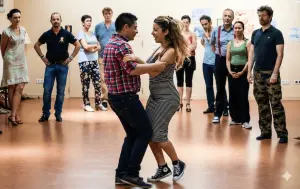
Argentine tango is defined by pure improvisation. From day one, we instruct our students to abandon routines. No sequence is ever memorized; each dance becomes a unique, spontaneous conversation. The leader proposes a movement inspired by the music, and the follower responds, enriching the dialogue with elegant embellishments known as adornos.
Everything begins and ends with the abrazo—the embrace. A true close embrace involves a chest-to-chest connection, allowing partners to feel each other breathe. This intimate, silent communication unlocks the dance’s magic. Mirrors become superfluous; the connection with your partner is all that matters.
- It's 100% improvised — no memorised routines, ever
- The embrace is everything — close, connected, and intimate (abrazo cerrado)
- The music is your guide — you dance differently to every orchestra
- It’s a whole family of dances: Milonguero, Salón, Nuevo, Canyengue, Fantasía
- It's a social dance with a rich culture and etiquette (the códigos of the milonga)
When dancing at local Brussels milongas like Cellule 133 or the Maison du Peuple, we move to the rhythms of Golden Age orchestras: the driving pulse of Juan D'Arienzo, the profound drama of Osvaldo Pugliese, and the elegant soul of Carlos Di Sarli. In our tango, the music acts as a third partner, dancing not merely to the beat, but allowing the music to flow through you.
Ballroom tango: structure, style, and competition
Ballroom tango is a highly structured, competitive discipline. Conceived by English dance instructors in the 1920s for judging, its natural environment is the brightly illuminated Dancesport arena, not the intimate, dimly lit milonga in Saint-Gilles.
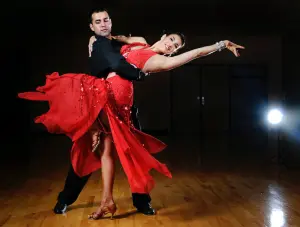
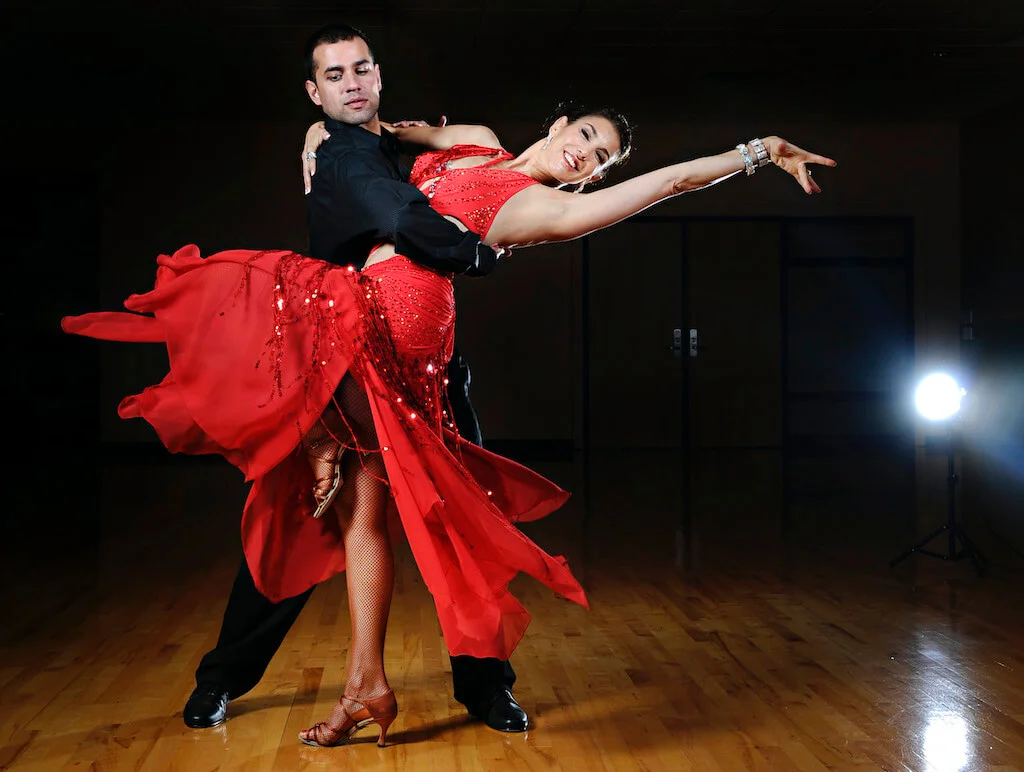
Ballroom tango is instantly recognizable. Dancers maintain a rigid, proud open V-frame, with physical separation at the hips, using sharp, dramatic head movements to punctuate the music. The aesthetic is sharp, theatrical, projecting outward to impress judges seated at a distance.
- Open V-frame: partners are offset with their heads turned away to the left
- Choreographed: it’s all about standardised figures and pre-planned routines
- Two main competition styles: American and International
- Known for staccato action, sharp head turns, and big, showy movements
The music adheres to a strict, marching rhythm, often composed specifically for competitions. The lead is forceful, driven through the arms and frame. While demanding considerable athleticism and discipline, it lacks the subtle, chest-to-chest dialogue central to Argentine tango.
Key differences at a glance
A direct comparison reveals stark contrasts. Both disciplines demand dedication, yet they place entirely different demands on the body and mind.
| Feature | Argentine Tango | Ballroom Tango |
|---|---|---|
| Structure | Fully improvised | Fixed figures and choreography |
| Embrace | Intimate, closed or semi-open | Open V-frame, distance between partners |
| Music | Classic tango orchestras, varied tempo | Standardised, 31–33 bpm |
| Goal | Connection and musical expression | Technical perfection and presentation |
| Expression | Understated, subtle, intimate | Dramatic, theatrical, staccato |
| Context | Milongas, social dancing | Dancesport competitions, ballrooms |
Is one superior? No. That question is akin to asking whether a cello is superior to a trumpet. Some of our students at BE-TANGO pursue both forms. They attend our classes in Brussels for the grounded, emotional connection of Argentine tango, while seeking the athletic challenge of choreographed routines at a ballroom studio.
Which style is right for you?
The choice hinges on your motivation for dancing.
Choose Argentine tango if you seek genuine connection. If you aspire to enter a milonga anywhere from Brussels to Buenos Aires, embrace a stranger, and share an unscripted three-minute conversation to a beautiful Pugliese recording, then this is your path. You belong with us.
Opt for ballroom tango if you thrive on structure, clear rules, and performance. If perfecting routines, measuring technical progress, and ultimately competing appeal to you, then the ballroom world awaits.
Here at BE-TANGO, our preference is clear. Since 2007, we have taught authentic Argentine tango in Belgium, emphasizing the quiet intensity of the embrace, the floorcraft required in a crowded milonga, and the profound musicality of the Golden Age orchestras. Join a class, step into the embrace, and experience the sensation firsthand.
Can ballroom dancers switch to Argentine tango?
Absolutely! As someone who has taught tango since 2007, I've seen many ballroom dancers make the transition to Argentine tango. It's not always seamless, but the rewards are well worth the effort. One of the biggest challenges is unlearning the rigid frame. Ballroom tango emphasizes a strong, fixed connection between partners, whereas Argentine tango prioritizes a more fluid and responsive abrazo. Embracing improvisation can also be daunting at first. Ballroom dancers are used to memorized steps and choreography, while Argentine tango thrives on spontaneity and reacting to the music and your partner. Finally, the close embrace can feel unfamiliar or even uncomfortable for some, but it's essential for the intimate connection that Argentine tango fosters.
However, ballroom dancers often possess valuable assets that aid their transition. They typically have a strong foundation in musicality and body awareness, which are crucial for understanding and interpreting tango music. They also tend to have good posture and footwork. To make the switch smoother, I recommend focusing on relaxing the frame, listening intently to the music, and surrendering to the moment. Start with the basics and gradually introduce more complex steps as you become comfortable with the improvisational nature of Argentine tango. And most importantly, be patient with yourself! The journey is part of the joy.
The music: why it sounds completely different
The music is perhaps the most striking difference between ballroom and Argentine tango. Ballroom tango often utilizes modern orchestral arrangements, sometimes even pop songs adapted for tango. It's designed for a more contemporary, easily digestible sound. Argentine tango, on the other hand, almost exclusively dances to recordings from the "Golden Age" of tango, roughly the 1930s to 1950s. Think orchestras like those of Carlos Di Sarli, Juan D'Arienzo, Aníbal Troilo, and Osvaldo Pugliese. These recordings have a raw, emotional depth that's hard to replicate.
The difference isn't just stylistic; it's emotional. The Golden Age orchestras evoke a sense of nostalgia, longing, and passion that perfectly complements the close embrace and improvisational nature of Argentine tango. If you're curious, give a listen to "Bahía Blanca" by Di Sarli or "El Corazón Me Engaño" by D'Arienzo. You'll immediately hear the difference. At our classes here at BE-TANGO, we always play authentic Golden Age tango, so you'll be immersed in the right atmosphere from day one. You can even explore the history of Argentine tango to understand the music's context.
Social dancing vs competitive dancing: a fundamental divide
The biggest divide lies in the social context. Ballroom tango is primarily geared towards competition, with meticulously choreographed routines judged by a panel of experts. Argentine tango, however, is fundamentally a social dance. It's about connection, communication, and shared experience. The social dance events are called milongas, and they are the heart and soul of Argentine tango.
There are no judges at a milonga. Instead, we have *codigos*, unwritten rules of etiquette that ensure everyone has a safe and enjoyable experience. These *codigos* are about respecting your partner, the music, and the flow of the dance floor. They are far removed from the rigid rules and regulations of competitive ballroom tango. Argentine tango’s emphasis on improvisation and connection makes judging it inherently subjective and, frankly, antithetical to its spirit. It's about feeling the music and connecting with your partner, not impressing a panel of judges. The joy comes from the dance itself and the community it creates. You'll find a thriving Argentine tango community here in Brussels with regular milongas happening all over the city.
Frequently Asked Questions
Which is easier to learn?
That depends on your learning style! Ballroom tango, with its structured steps, might seem easier initially. However, Argentine tango's emphasis on improvisation and connection can ultimately be more rewarding. Many find that Argentine tango is easier to "feel" and connect with the music.
Can I compete in Argentine tango?
While there are some Argentine tango competitions, they are very different from ballroom competitions. They tend to focus more on improvisation and musicality than on rigid technique. However, the core of Argentine tango remains social dancing at milongas.
Do ballroom tango shoes work for Argentine tango?
While you *can* wear ballroom tango shoes for Argentine tango, they are not ideal. Argentine tango shoes typically have a more flexible sole and a different heel shape, which allows for greater freedom of movement and better connection with the floor. If you plan to dance Argentine tango regularly, investing in a pair of proper shoes is recommended.
Which has more social dancing opportunities in Brussels?
Definitely Argentine tango! Brussels has a very active Argentine tango scene, with milongas happening almost every night of the week. You'll find plenty of opportunities to practice and connect with other dancers. Explore why learn tango in Brussels and you will find out the active social scene.
Is one more romantic than the other?
Romance is subjective, but many find Argentine tango to be more inherently romantic due to the close embrace, intimate connection, and passionate music. The improvisation and non-verbal communication also contribute to a deeper sense of connection between partners.